What is brand photography and do you need it?
If you've been running a business for any length of time, you've probably heard the term "brand photography" floating around - in entrepreneur Facebook groups, on marketing podcasts, in conversations with other business owners who seem to have their visual presence completely figured out while you're still using a photo your friend took at a networking event two years ago. Brand photography sounds like something that belongs to big companies with real marketing budgets. It sounds like something for people who have their brand fully figured out. It sounds like maybe, possibly, eventually - but not right now.
I want to gently push back on all of that. Because in my experience, the business owners who assume brand photography isn't for them yet are often exactly the ones who need it most.
So what actually is brand photography?
Brand photography is a collection of professional images created specifically to represent you, your business, and the work you do - across your website, your social media, your marketing materials, your email newsletters, and anywhere else your business shows up visually. It's different from a headshot, though a great headshot is usually part of it. It's different from product photography, though product images can be part of it too. Brand photography is broader than either of those: it's the full visual story of who you are as a business owner, what you do, how you work, and what it feels like to be a client of yours. It's the difference between a single photo of your face and an entire visual world that communicates your values before a single word is read.
What does a brand session actually include?
Every brand session is different, because every brand is different - but generally, brand photography covers a few key categories. Portrait images: professional, polished photos of you that go beyond a stiff headshot and show you as a real, approachable, trustworthy person. Lifestyle and process images: photos of you doing the actual work - at your desk, in your studio, with your tools, in your element. These images are some of the most powerful because they pull back the curtain and invite potential clients into your world. Detail and product images: the props, the textures, the objects that visually represent your brand - your coffee mug, your notebook, your equipment, your workspace. And finally, contextual images: photos that establish the atmosphere and feeling of your brand, even when you're not in the frame. Together, these categories give you a deep library of images you can use across every platform and touchpoint for months, or even a year or more.
Why does it matter so much right now?
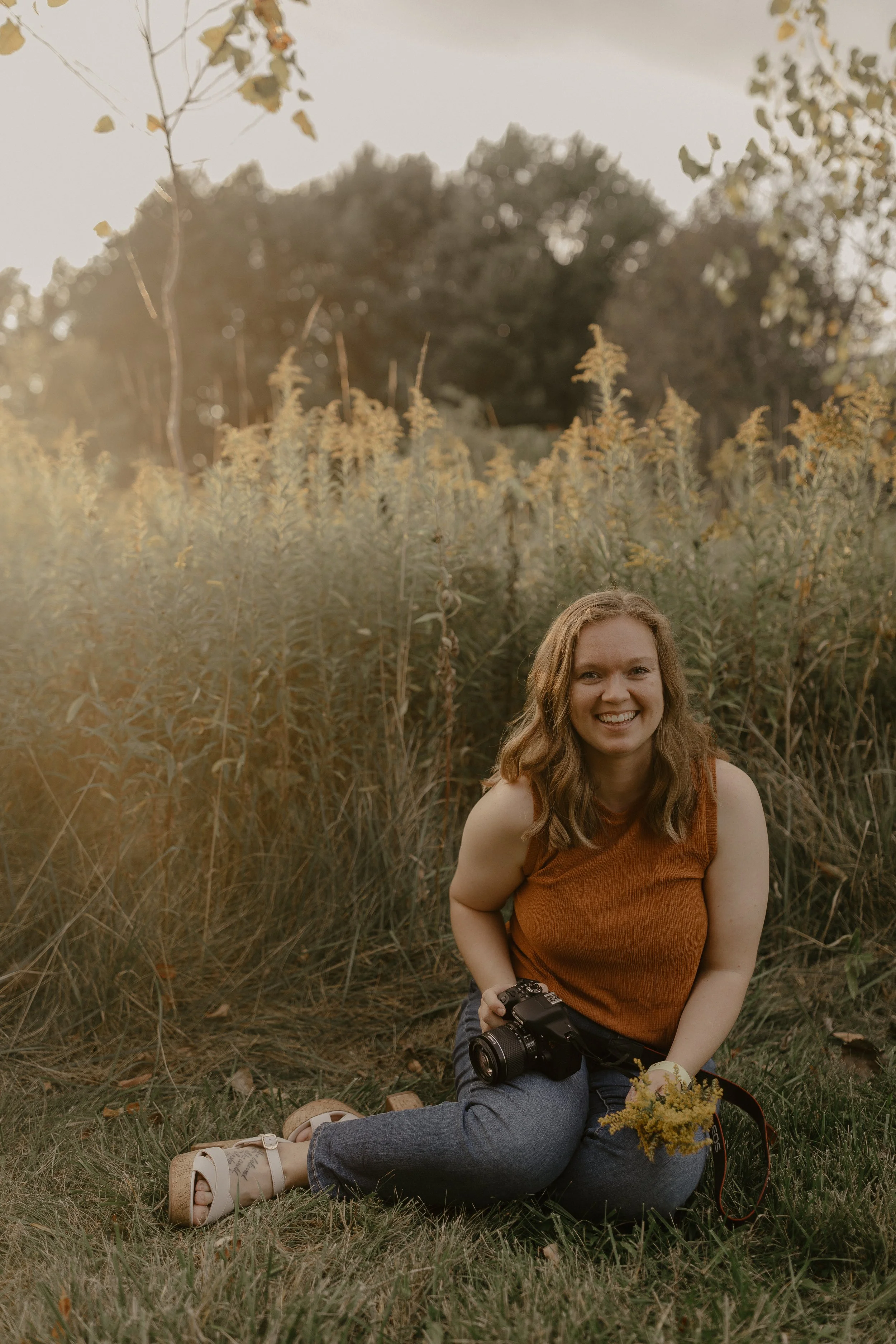
The online business landscape has changed significantly, even in the last few years. Buyers and clients are savvier, more visual, and more discerning than they've ever been. Before someone reads a single word on your website, they've already formed an impression based entirely on how it looks. Before a potential client decides whether to inquire, they've likely spent time on your Instagram, evaluated your consistency, noticed whether your images feel polished or haphazard. The visual layer of your business communicates things that words can't - your professionalism, your personality, your attention to detail, whether you're someone they want to work with. Stock photos can fill some of those gaps temporarily. Phone photos from a well-lit bathroom can do the job in a pinch. But neither of those things tells your story, and your story is actually your most powerful marketing asset.
But I'm not photogenic - does that matter?
Yes, I'm going to address this directly, because it comes up almost every time I talk to a business owner about brand photography. You don't have to be photogenic. You don't have to be thin, or young, or conventionally beautiful, or comfortable on camera, or any particular version of presentable. What you have to be is real - and real is exactly what I'm there to capture. My job in a brand session isn't to make you look like a model. It's to make you look like you, on a really good day, in your element, doing the thing you're genuinely good at. When I photograph a brand session well, the resulting images should make the people who already know you say "yes, that's exactly her" - not "wow, she cleans up nice." Authenticity is the whole point.
What about using my phone or hiring someone cheap?
I'll be honest with you, because I think you deserve honesty more than a sales pitch: for some businesses, at some stages, phone photography or budget options are the right call. If you're in the very earliest days of your business and you're not yet sure what you're building, investing heavily in brand photography might genuinely be premature. But for any business owner who is actively trying to attract clients, charge for their expertise, and build something credible and lasting - the visual quality of your photography will either support or undermine every other effort you make. A beautifully written website with blurry, inconsistent images sends a mixed message. A strong social media strategy powered by dim phone selfies has a ceiling. At a certain point, the photos stop being a "nice to have" and start being a competitive disadvantage if you don't have them.
How is brand photography different from a headshot session?
A headshot is one image - usually a portrait, usually fairly simple, usually designed to go on a LinkedIn profile or a speaking bio. It does one specific job. Brand photography does many jobs. A full brand gallery might include fifty to one hundred images spanning multiple looks, multiple locations or settings, and a wide range of use cases. You're not just walking away with a photo of your face - you're walking away with the visual infrastructure of your business. If a headshot is a business card, brand photography is your entire storefront.
How do you know when you're ready?
Here's my honest answer: you're ready for brand photography when you're clear enough on who you serve and what you offer that you want to attract more of it. You don't have to have a perfect brand identity document or a completed website or a fully articulated aesthetic. You need to know roughly who you are, who your clients are, and what you want people to feel when they encounter your business. From there, we can build a session that captures all of it. I work with clients before their session to understand their brand, their goals, their visual inspirations, and their practical needs - so that we walk in with intention and walk out with images that actually work for your business, not just images that look pretty.
What should you do with brand photos once you have them?
Everywhere. Genuinely, everywhere. Your website's homepage and about page. Your Instagram grid and stories. Your Facebook business page. Your email newsletter header. Your email signature. Your LinkedIn profile. Any press, podcast graphics, or media features. Printed materials if you use them - business cards, brochures, signage. The goal of a brand session is to create a large enough library that you're never scrambling for content, never posting a blurry phone photo because you don't have anything else, never settling for a stock image that looks nothing like you. When brand photography is done well, it fuels your marketing for months and makes every platform you show up on feel cohesive, intentional, and professional.
The bottom line: do you need it?
If you're asking the question, probably yes. Business owners who have their visual presence completely handled tend not to be wondering about brand photography - they already have it, or they're thinking about when to refresh it. The fact that you're reading this, the fact that the question is even on your radar, usually means something in your business's visual story feels unfinished. Not because you're doing anything wrong, but because you haven't yet invested in telling it properly. Brand photography is that investment. And unlike a lot of marketing spend, it's one that pays dividends every single day - on every platform, in every pitch, in every first impression that leads someone to decide: yes, I want to work with her.
If you're curious about what a brand session with me looks like, I'd love to talk. We can start with a conversation about where your business is, what you're trying to communicate, and whether the timing feels right. No pressure, no hard sell - just two people talking about your business and what it deserves to look like in the world.
