How I Choose the Locations I Shoot At
Every time a client books a session with me, one of the first questions they ask is: "Where should we go?" It seems simple on the surface - pick a pretty spot, show up, take photos. But the truth is, location scouting is one of the most thoughtful parts of my job. The right location doesn't just look good in photos. It feels right for the people in them. And getting there takes a lot more intention than most people realize.
When I first started shooting, I'll be honest - I defaulted to the same handful of spots because they were safe. I knew the light. I knew the angles. I knew exactly what I'd get. And for a while, that worked. But I started noticing something: the images felt a little… generic. Beautiful, yes. But interchangeable. Like they could have been shot anywhere, for anyone. That realization pushed me to completely rethink how I approach location selection, and I haven't looked back since.
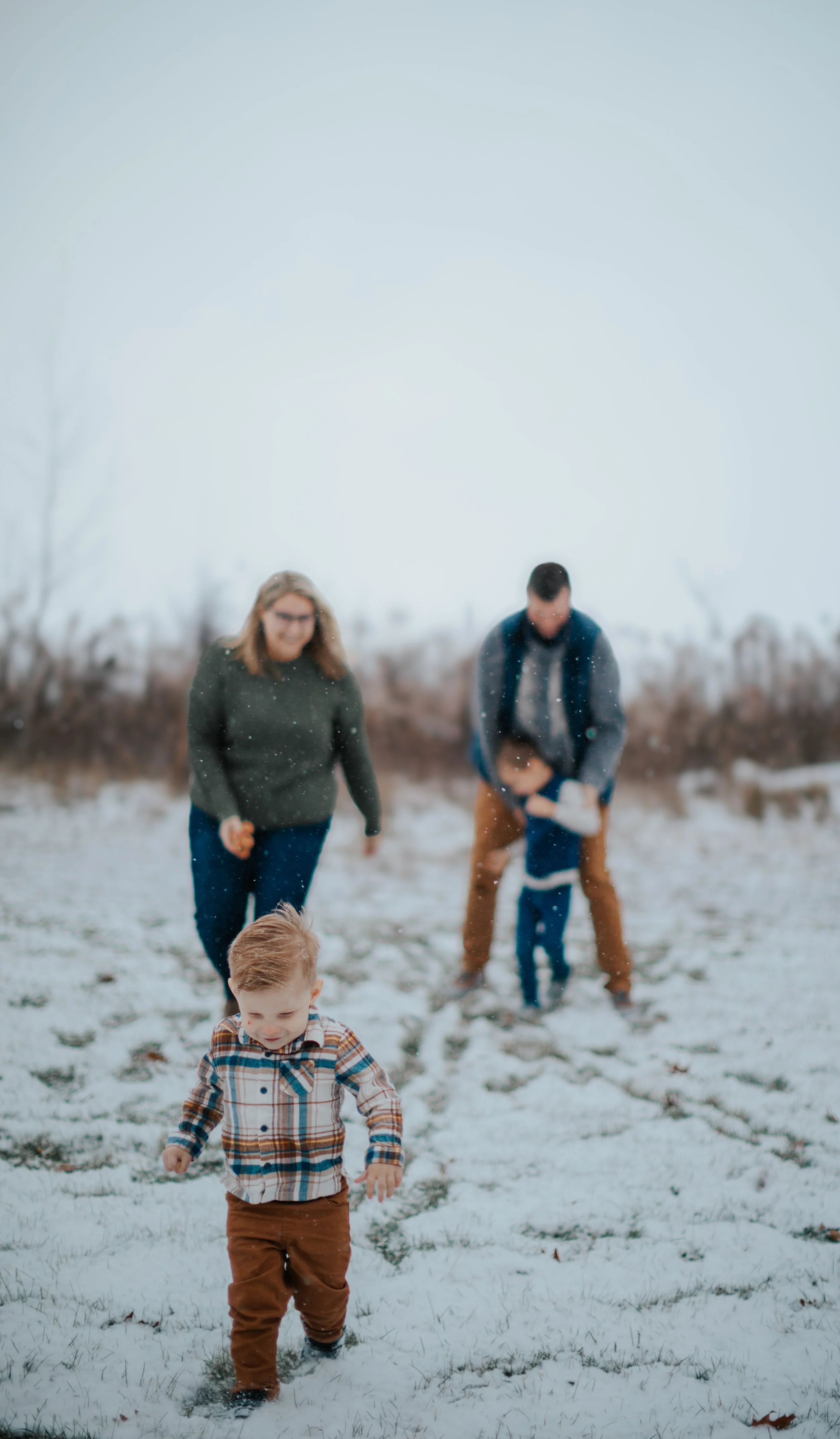
The very first thing I think about is light - always light. A location is only as good as the light it offers at the time of day we're shooting. I will choose a "less beautiful" location with gorgeous, soft, directional light over a technically stunning spot that puts harsh shadows on people's faces every single time. Golden hour (that magical window roughly an hour before sunset) is my favorite for a reason: the light is warm, forgiving, and flattering on absolutely everyone. When I'm scouting or recommending a location, I'm always asking myself: what will the light look like here at 6pm in October? Will we be fighting the sun, or working with it?
After light, I think about the feeling of the space. Does this location match the vibe of the session? A couple who described their relationship as "outdoor adventurers who hate being too dressed up" needs a completely different setting than a family who just built a farmhouse and wants photos that feel like a page from a lifestyle magazine. A mossy forest trail and an open wheat field can both be stunning - but they tell different stories. Part of my job is matching the emotional tone of the location to the emotional tone of the people in it.
I also pay close attention to variety within a single location. My favorite shooting spots aren't just one backdrop - they're worlds. A good location gives me open field light, wooded shade, a water element, and maybe a texture like an old fence or a weathered barn wall, all within a short walk. That variety means I'm not shooting the same composition for an hour straight. It keeps the session fresh, keeps clients moving (which helps them relax and stop feeling like they're "posing"), and gives the final gallery a sense of depth and story.
Practicality matters more than people expect. A gorgeous location that requires a mile hike through mud isn't going to work for a maternity client in her third trimester or a family with a two-year-old who just figured out how to run. When I'm recommending spots, I'm thinking about parking, accessibility, how far the walk is, whether there are restrooms nearby for sessions with kids, and whether the location is public or requires a permit. These things sound boring, but they make or break a session experience - and I care deeply about that experience being a good one.
Speaking of permits - yes, some locations require them, and I always, always get them when needed. Shooting on certain state parks, private property, or popular tourist areas without a photography permit isn't just legally risky, it's disrespectful to the property and to other visitors. When I do have to navigate permits, I factor that into my planning timeline and my clients never have to worry about it. It's just part of how I do business.
One of my favorite ways to discover new locations is simply by exploring with my camera on my own time. I'll drive out to an area I've been curious about, walk around, and shoot the environment - no people, no pressure. I'm looking at how light moves through trees, noticing where open clearings appear, checking the ground for anything that might be a tripping hazard (truly, the unglamorous stuff matters). Some of my best client locations came from a random Sunday afternoon drive where I stumbled onto something that took my breath away.
I also lean heavily on client input, more than most people probably expect. I'll ask what draws them to the outdoors, what neighborhoods feel like home to them, if there's a place that holds significance in their relationship or family story. Sometimes the best location for a session is somewhere deeply personal - the park where a couple got engaged, the beach a family visits every summer, the street where someone grew up. Those spots don't always look perfect in a technical sense, but the meaning in them translates into the images in a way that no perfectly lit field can replicate.
For clients who truly have no preference and want me to just choose, I keep a mental (and sometimes literal) roster of locations I love, organized loosely by session type and season. My family spots lean toward open, accessible areas with room for kids to run. My couples spots tend to be a little more intimate - tucked away, quieter. My maternity locations are chosen for beauty and ease. And Michigan gives me so much to work with: the lakes, the farmland, the forests, the changing seasons. I genuinely feel lucky to live and shoot here.
Seasonality is a huge factor that doesn't get talked about enough. A location I'd enthusiastically recommend in October might be completely underwhelming in July, and vice versa. The cornfields I love for fall sessions are bare and flat come spring. The wildflowers that make a certain meadow magical in June are long gone by August. Part of my location knowledge is knowing which spots shine in which seasons, so I'm always steering clients toward places that will look their absolute best during the time of year they're booking.
I also think about how locations interact with what clients wear. This sounds like a strange detail, but it's real: earthy tones disappear against earthy backgrounds, and I've had clients show up in forest green to a forest session and nearly blend into the trees. When I recommend a location, I'll often give a heads-up about what color palettes tend to work well there. It's a small thing that makes a big difference in the final images.
Finally, I'm always honest with clients when I don't love a location they've requested. If someone has their heart set on a spot that I know is going to be challenging - maybe the light is terrible there at the time we'd be shooting, or it's extremely high-traffic and we'd have no privacy — I'll say so. I'll explain why and offer alternatives that might give them the same feel they're going for. My clients trust me to make creative decisions on their behalf, and that trust means I have to use my voice even when it's easier to just say yes. The goal is always the best possible photos for them, not just the photos that are easiest for me to take.
At the end of the day, location selection is a blend of art, logistics, and intuition. It's one of those parts of this job that looks effortless in the final images - and that's exactly how I want it to feel. When everything comes together, the location doesn't compete with you. It holds you. It becomes the world that your photos live in, and those photos become the memories you'll keep for the rest of your life. That's worth thinking carefully about. Every single time.
