Photography pricing - Let’s talk about it
Pricing is one of the topics photographers talk about the least publicly and think about the most privately. It's personal - in a way that goes beyond business. Because your pricing isn't just a number. It's a statement about what you believe your work is worth, what kind of clients you want to attract, and what kind of business you're trying to build. For years, I did what a lot of photographers do: I looked at what other people were charging, landed somewhere in the middle, and hoped for the best. It took me a long time - and some hard lessons - to understand that that approach wasn't actually serving me, or my clients. So this post is my attempt to be transparent about how I actually set my prices, why I charge what I charge, and what goes into the number you see when you visit my website.
Let me start with the thing nobody talks about first: photography is expensive to do well. Not to receive - to provide. By the time you're looking at my pricing, I've already invested in professional camera bodies and lenses that cost thousands of dollars and need to be replaced or repaired over time. I've paid for editing software subscriptions, gallery delivery platforms, contract management tools, and client communication systems. I carry liability insurance. I pay for ongoing education, workshops, and mentorship that keeps my skills sharp. I spend hours before your session planning and communicating, hours during your session shooting, and often more hours afterward culling and editing than the session itself lasted. When you book a two-hour family session, you're not paying for two hours of my time. You're paying for everything it took to make those two hours worth having.
The real cost of "cheap" photography.
I understand that price matters. Budgets are real, and I'm not dismissing them. But I want to offer some context about what lower-cost photography often actually means, because I think it's useful for clients trying to make sense of a landscape where one photographer charges $150 and another charges $1,500 for what looks like the same thing. Very low pricing in photography almost always means one or more of the following: the photographer is brand new and building their portfolio, they're undercharging because they haven't yet figured out their costs, they're treating photography as a side hobby rather than a professional service, or they're cutting corners somewhere in the process - on equipment, on editing time, on the quality of the final delivery. None of those things are automatically bad, but they're worth knowing. When pricing looks too good to be true in photography, it often is.
I price to be sustainable, not just competitive.
For a long time I priced myself against what other photographers in my area were charging, which meant I was constantly undercutting my own value to stay "competitive." The problem with that model is that it's a race to the bottom with no finish line. At some point I did the math — really did the math — on what it actually cost me to run my business and deliver the quality I was delivering, and I realized I was working harder than I needed to for less return than I deserved. Pricing sustainably means charging enough to cover my costs, compensate myself fairly for my time and expertise, invest back into my business, and still be here for you in five years. A photographer who burns out or goes out of business because they can't make the numbers work isn't actually a bargain.
Experience is part of what you're paying for.
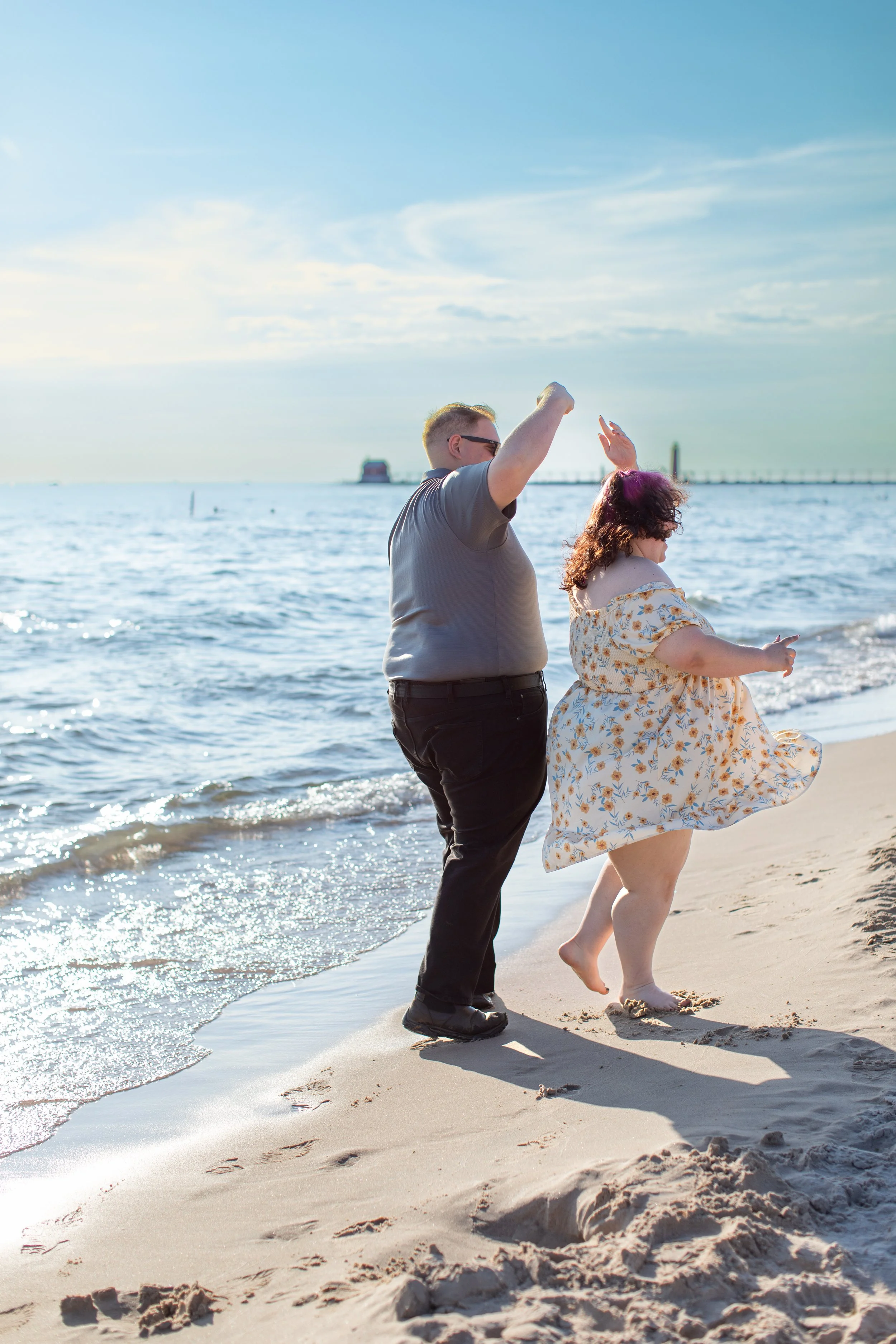
When I started out, I charged very little - because I was worth very little in the professional sense. I was learning, making mistakes, developing my eye, finding my style. That's exactly as it should be. But ten years later, I know things I couldn't have learned any other way. I know how to read light in real time and move people to find the best of it. I know what to do when a toddler melts down fifteen minutes into a session. I know how to put a nervous person at ease, how to get a genuine laugh out of someone who is mortified to be in front of a camera, how to save a backlit situation that looks impossible. That accumulated expertise is genuinely part of what you're purchasing when you book with me. You're not just booking a camera. You're booking ten years of knowing what to do with it.
What my pricing actually includes.
I want to be transparent here, because I think hidden costs and surprise fees are one of the worst experiences a client can have. When you see my session pricing, here is what is included: a pre-session consultation where we talk through your vision, location, outfits, and logistics. The session itself - the full time we've agreed to, not a minute less. Same-day or next-day communication if you have questions leading up to the session. Professional editing of your final gallery - not batch processing with a filter slapped on, but individual attention to each image for color, exposure, and consistency. Delivery of your full gallery through a professional platform with download options and a print store. And follow-up after delivery to make sure you're happy and answer any questions about printing or products. That is the baseline. Every client gets it.
Why I don't charge the least, and why that's okay.
I am not the most affordable photographer in mid-Michigan. I am not trying to be. The clients who are right for me are not primarily shopping on price - they're shopping for a specific experience, a specific quality, and a photographer they trust to show up and do the work well. I want clients who value their images enough to invest in them, who understand that the difference between a $200 session and what I charge is not arbitrary, and who come into the experience ready to be present rather than preoccupied with whether they got a deal. That is not elitism - it's alignment. When a client understands and respects what they're paying for, the whole experience is better. They communicate more openly. They trust the process more. They're more present. And the images show it.
How I handle add-ons and products.
My session pricing covers the session and the digital gallery. Prints, albums, wall art, and other physical products are available as add-ons, either at the time of booking or after gallery delivery. I price my products fairly - not at a markup that feels like a cash grab, but at prices that reflect the quality of the labs I use and the time it takes to properly design and order them. I don't pressure anyone to purchase products. But I do encourage it, because I believe strongly that photos printed and displayed are fundamentally different from photos living in a folder. If budget is a concern, I'd rather help you prioritize one meaningful print than watch your entire gallery gather digital dust.
What I consider when I revisit my pricing.
My pricing isn't static. I review it at least once a year, and I adjust based on a few factors: changes in my costs (equipment, software, insurance, education), changes in demand for my time, and honestly, changes in my own sense of what my work is worth as it continues to grow. Raising prices is not something I do casually or without thought. I know it affects clients, particularly returning ones. But it's also a necessary part of running a healthy, sustainable business - and it signals something true: that I take this work seriously and I'm continuing to invest in making it better. If you've worked with me before and noticed a price change, that's what's behind it. Never greed. Always intention.
I want to be someone you can afford, if this is the right fit.
Here's the honest truth about the other side of this: I don't want price to be the reason the right clients can't work with me. If you've looked at my pricing and it's genuinely out of reach right now, I will always have an honest conversation with you about it. Sometimes there are options - a shorter session, a weekday slot, a simpler package - that bring the investment down without compromising the quality of the experience. I can't make promises in the abstract, but I can make space for a real conversation. What I'm not able to do is reduce my pricing significantly across the board, because doing so would mean reducing what I'm able to deliver - and I'm not willing to do that to you or to my work.
Photography is a luxury - but not the kind you think.
I want to close with something I think about a lot. Photography is sometimes categorized as a luxury, which implies it's optional, indulgent, something you have when everything else is already taken care of. And in a strict financial sense, sure - no one needs a professional photo session to survive. But when I think about what my clients are actually paying for, "luxury" feels like the wrong word. They're paying to have this season of their life documented. They're paying for images their kids will inherit. They're paying for the thing they'll point to in forty years and say: that was us, that was real, we were there. There's nothing frivolous about that. It's one of the most human things a person can do - to say that this life, this family, this love is worth preserving. My pricing reflects how seriously I take that responsibility. I hope this post helps you understand why.
