Building a wedding day timeline that works for photos
Of all the conversations I have with my wedding clients, the one about the timeline is often the most underestimated - and the most important. Couples spend months choosing a venue, a dress, a caterer, a florist. They agonize over centerpieces and cake flavors and seating charts. And then, somewhere in the final weeks before the wedding, they throw together a rough schedule and call it a plan. I understand how this happens. By the end of wedding planning, decision fatigue is very real. But the timeline is the one thing that, more than almost anything else, determines how your photos turn out. And getting it right doesn't require a lot of extra work - it just requires knowing what to think about.
This post is everything I've learned after photographing weddings in Michigan and beyond. Not just tips and tricks, but the actual logic behind why certain timeline choices produce certain results. My goal is that by the end of this, you understand your timeline well enough to build one that works for you - your venue, your vision, your day.
Start with sunset and work backwards.
If there's one thing I could tattoo on every wedding timeline, it would be this: know your sunset time and protect the hour before it. Golden hour - the window roughly forty-five minutes to an hour before sunset - is the single most important light window in outdoor wedding photography. The light is warm, directional, and flattering in a way that no other time of day can replicate. If your portraits happen at 2pm under a flat summer sun, I will still get you beautiful images, but it will require more work and more creative problem-solving than it would at 7pm in October when the light turns golden on its own. Before you set any other time on your timeline, look up your wedding date's sunset time and mark it. Then plan to be somewhere beautiful with your photographer in the thirty to sixty minutes before it.
Understand how much time getting ready actually takes.
This is where timelines almost always fall apart first. Getting ready consistently takes longer than brides expect - and the gap between the estimate and reality tends to grow as the wedding gets closer. Hair and makeup for a wedding party of five is not five times forty-five minutes. It's more, because there are delays, and touch-ups, and the maid of honor's hair didn't turn out right the first time, and someone can't find their earrings. As a general rule, I recommend building in significantly more time than your hair and makeup artist quotes - at least thirty to forty-five extra minutes as a buffer. When getting ready runs late, everything downstream suffers: first look, family portraits, cocktail hour coverage, golden hour. Protect the getting-ready window and the rest of the day has a fighting chance.
Decide early whether you want a first look.
A first look - the moment before the ceremony where you and your partner see each other privately, with your photographer present - is one of the most impactful timeline decisions you'll make, and it's worth thinking through before you start building your schedule. First looks allow you to complete most of your couple portraits before the ceremony, which means two things: you can actually enjoy your cocktail hour with your guests instead of being pulled away for photos, and your portrait time isn't constrained by fading light or the chaos of post-ceremony adrenaline. For many couples, a first look also settles nerves in a way that makes the ceremony itself more present and emotional, not less. If you're on the fence, I almost always recommend it - but it's genuinely a personal choice, and I'll work with whatever you decide.
Allocate portrait time generously - and guard it.
This is the section where I ask you to trust me. The time you allocate for portraits will be cut into from every direction. A ceremony that ran long. Family who couldn't be rounded up for formals. A cocktail hour that pulled your partner away for a drink with a long-lost college friend. Vendors who need five minutes just as you were heading out for couple portraits. It happens at almost every wedding, because weddings are joyful chaos by nature. The couples who end up with the most beautiful portrait galleries are the ones who built extra time into the portrait blocks and then had a coordinator or point person actively protecting it. For couple portraits alone, I recommend a minimum of thirty to forty-five minutes, with an hour being ideal. For family formals, plan about ten to fifteen minutes per grouping - and keep the list tight.
Keep the family formal list manageable.
Speaking of family formals: the longer the list, the longer the time, and the more everyone's patience (including small children's) gets stretched. I've photographed weddings where the family formal list had thirty-two groupings on it. I've also photographed weddings where there were eight, and we were done in twenty minutes and everyone was happy. My recommendation is to include the groupings that truly matter - immediate family, close family, anyone you'll regret not having documented - and let the candid photography handle the rest. Announce at the beginning of formals that there will be a time for guests to take their own photos afterward, which usually satisfies the people who wanted more groupings. Shorter list, better energy, better photos.
Think carefully about your ceremony lighting.
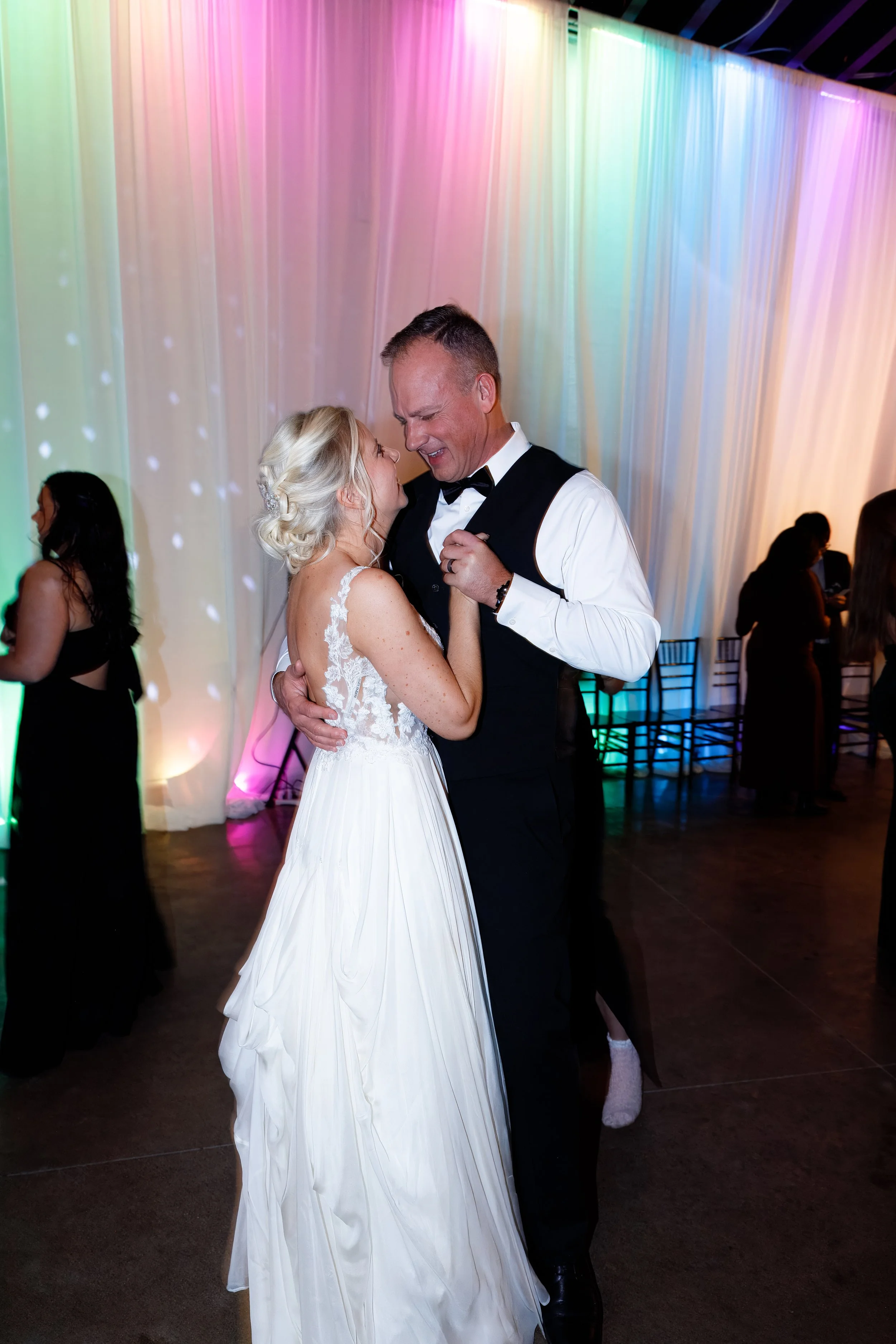
If you're getting married in a church or indoor venue, it's worth a genuine conversation with your photographer about the lighting situation before the wedding day. Dark ceremony venues - beautiful stone churches, candlelit ballrooms, historic halls - can be challenging to photograph without flash, and flash changes the feeling of the images significantly. Ask your photographer how they typically handle your venue's light conditions. Ask whether the venue allows flash during the ceremony. If the venue is very dark and flash is prohibited, that's important information for both of you. It doesn't mean you can't get beautiful ceremony images - it means you and your photographer need to have a plan before the day arrives, not while it's happening.
Build a real buffer before the ceremony.
One of the most consistent pieces of timeline advice I give is this: do not schedule anything in the thirty minutes before your ceremony begins. Not portraits, not a vendor meeting, not a chat with your florist about the centerpieces. That window is for being still, breathing, drinking some water, and settling into the reality that you're about to get married. It's for your photographer to scout the ceremony space and get into position. It's for your coordinator to handle the inevitable last-minute thing that always comes up. Ceremonies that start with a calm, prepared couple look different than ceremonies that start with a rushed, flustered one. Protect that buffer like you'd protect golden hour.
Reception coverage needs a timeline too.
The reception is often the most loosely planned part of a wedding timeline, and it's worth giving it some structure. Coordinate with your DJ or band on the order of events: grand entrance, first dance, parent dances, toasts, dinner service, cake cutting, open dancing. Share that order with your photographer so they know what's coming and can be in position without you having to track them down. If there are specific reception moments you absolutely want documented - a surprise performance, a sentimental toast, a particular tradition - flag them explicitly. I pay attention and try to anticipate everything, but I am not psychic. The more information you give me in advance, the better I can serve you in the moment.
Account for travel time if your venues are separate.
If your getting-ready location, ceremony venue, and reception venue are all different - which is common - travel time between them needs to live explicitly in your timeline, not as an assumption. Twenty minutes of driving is twenty minutes that can't be used for portraits. And "twenty minutes" in wedding-day reality often becomes thirty-five, because everyone moves slower in formal wear and someone always leaves something behind. When I'm helping clients build timelines, I add a buffer to every travel segment. Not because I'm being pessimistic, but because I've seen too many portrait windows evaporate in transit to pretend it doesn't happen.
Share the timeline with everyone who needs it.
A timeline that only lives on your phone and your partner's phone is a timeline that will be violated repeatedly and without malice. Your entire vendor team - photographer, videographer, coordinator, DJ, hair and makeup, florist - should have a copy of the full timeline well before the wedding day. Your wedding party should have it. Key family members should have it. The more people who know the plan, the more people who can help you stick to it. Coordination on a wedding day is a team sport. A timeline is the playbook, and everyone on the field needs to know it.
Here's the truth about wedding day timelines: the couples who have the best photo experiences aren't the ones whose days went perfectly. They're the ones who planned thoughtfully enough that when things shifted - and things always shift - there was room to absorb the change without losing the moments that mattered. A good timeline isn't a rigid script. It's a sturdy framework that gives your day structure without stealing its spontaneity. Build it carefully, guard it generously, and then let the day be what it's going to be. That's when the magic happens - and that's exactly what I'm there to catch.
If you're in the early stages of wedding planning and want to talk through your timeline, reach out. I genuinely love this part of the process, and helping couples think through their day before it happens is one of the ways I can serve you best.
